
 Located along the Huron River near Detroit, Ford Lake is one of the largest impoundments on the Huron and has been used for hydroelectric power purposes since 1932. The Ford Lake Dam was originally constructed by Henry Ford, who was an expert on hydroelectric power generation. It is now owned and operated by Charter Township of Ypsilanti and is still used today for generating electricity.
During late summer months, Ford Lake experiences massive algae growth, causing localized fish kills and foul odor. As a result, the lake has been the site of research sponsored by the Environmental Protection Agency (2003-2006) and also by the US Department of Agriculture since 2006. The study, led by Professor John Lehman of the University of Michigan, investigates the causes and possible corrective measures for the nuisance algal blooms that plague Ford Lake.
Researchers developed a management plan that they tested through lake experiments from 2006 to 2009. To complement and automate these experiments, the Charter Township of Ypsilanti deployed two real-time dissolved oxygen monitoring buoys along with a multi-parameter weather station.
Monitoring made easy
 The multi-point, dissolved oxygen monitoring buoys were deployed at two locations near the dam, both in Ford Lake and downstream of the Huron River. Researchers selected the NexSens MB-300 (legacy model), a 30-inch-diameter, polymer-coated, foam-hull buoy with 300 pounds of buoyancy. This compact buoy is easy to deploy and ideal for supporting monitoring instruments in small reservoirs, lakes, rivers, streams, and protected coastal waters.
YSI 600OMS V2 optical monitoring sondes with ROX Optical Dissolved Oxygen sensors were chosen to measure DO levels at five-minute sampling intervals. The ROX Optical DO sensor features a self-cleaning wiper that is ideal for long-term deployments. A NexSens T-Node water temperature string collects temperature data alongside water quality data from the sondes to obtain a complete, vertical water quality profile.
University of Michigan researchers also chose to integrate existing Turner Cyclops-7 and SCUFA submersible fluorometers into the system for measuring chlorophyll, turbidity, and phycocyanin (blue-green pigment). NexSens created a connectorized sensor cable, allowing plug-and-play integration with the data logger.
Housed within each buoy, a NexSens SDL submersible data logger collects data from the instruments and transmits it via wireless spread-spectrum radio telemetry to the hydroelectric plant’s rooftop. Also mounted on the roof is a Vaisala WXT-series multi-parameter weather sensor. This highly accurate sensor features no moving parts and simultaneously measures wind speed and direction, liquid precipitation, air temperature, relative humidity, and barometric pressure.
By making this data available to all interested parties via a NexSens WQData web datacenter, researchers can investigate the interactions of weather conditions and river water quality in real time. Researchers are also using this real-time data to develop complex computer animations that show the changing temperature, oxygen, and pigments in 3D. Moving forward, Dr. Lehman and his group hope to develop new theories that can guide future lake management efforts both on the Huron River and nationwide.
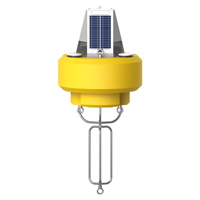
The NexSens CB-450 Data Buoy is designed for deployment in lakes, rivers, coastal waters, harbors, estuaries and other freshwater or marine environments.
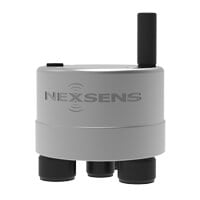
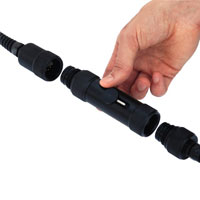
The NexSens T-Node FR thermistor string provides high precision temperature measurement in an addressable and connectorized assembly.
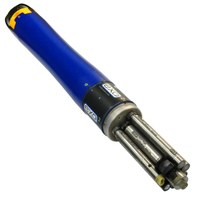
The YSI EXO represents the next generation of water quality instruments from YSI. The EXO2 sonde includes six sensor ports and a central anti-fouling wiper option.
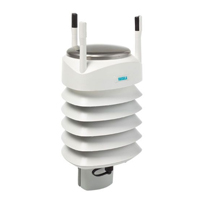
The Vaisala WXT536 Multi-Parameter Weather Sensor simultaneously measures air temperature, humidity, pressure, rainfall and wind in a compact platform with optional heating.
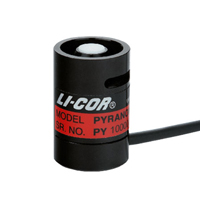
The LI‑200R Pyranometer measures total solar radiation. In outdoor sky conditions, the LI‑200R performs comparably to first-class thermopile pyranometers.
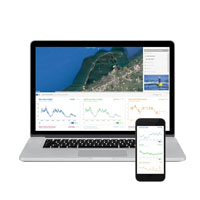
WQData LIVE is a web-based project management service that allows users 24/7 instant access to data collected from remote telemetry systems.